For years, SEO professionals have optimized for algorithms—clusters of rules that decide who ranks and who doesn’t. Then came machine learning. Then AI-generated search results. And now, Google-Agent is here, and it is changing the game in a way that most businesses haven’t prepared for.
Google-Agent is not another update you can wait out. It is a fundamental shift in how Google decides what content deserves to be seen. If you are still running the same SEO playbook from three years ago, this article is the wake-up call you need.
What Is Google-Agent and Why Does It Matter
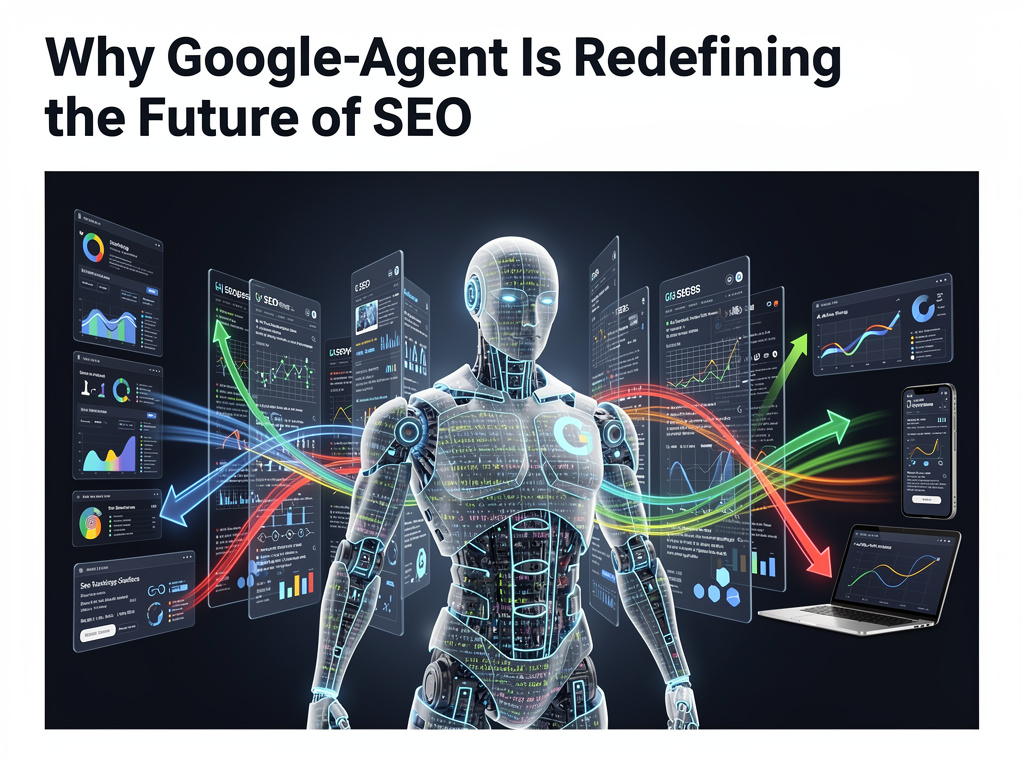
Google-Agent is Google’s AI-driven evaluation system that goes beyond traditional crawling. Where old crawlers indexed content and matched keywords to queries, Google Agent behaves more like an intelligent reader. It assesses your content for depth, accuracy, relevance, and trustworthiness—the same qualities a knowledgeable human would look for.
Think of it this way. A traditional crawler visits your page and notes what words appear and how often. Google Agent visits your page and asks, “Does this actually help someone?” Is the author credible? Is this the best answer available on the topic?
This is a profound shift. It means SEO is no longer purely a technical exercise. It is increasingly an exercise in genuine expertise and content quality.
How a Google Agent Evaluates Your Website
Understanding what Google-Agent looks at is the first step to optimizing for it. Based on everything known about Google’s direction, it evaluates several core dimensions.
Content depth is the starting point. Shallow articles that skim the surface of a topic are being passed over in favor of content that actually covers a subject thoroughly. This does not mean writing longer for the sake of length; it means covering a topic so completely that a reader doesn’t need to go anywhere else.
E-E-A-T — Experience, Expertise, Authoritativeness, and Trustworthiness — has never been more important. Google-Agent is designed to identify whether the person or organization behind the content genuinely knows what they are talking about. Author credentials, brand mentions, backlinks from credible sources, and consistent publishing on a topic all feed into this evaluation.
Site architecture and speed are still critical. An AI agent that evaluates content like a human still expects a fast, well-structured site. If your pages load slowly or your internal linking is disorganized, you are creating friction that signals poor quality.
Topical authority matters more than individual keywords. Google-Agent looks at whether your site owns a subject area, not just whether a single page mentions the right words. A site that covers a topic from multiple angles, answers related questions, and builds a coherent body of knowledge will consistently outperform one that targets isolated keywords.
What This Means for Your Current SEO Strategy
If your current strategy is built around keyword density, thin blog posts, and chasing quick backlinks, it is time to rebuild. Google Agent rewards websites that are built like trusted resources, not content farms.
Start by auditing your existing content. Identify pages that are thin, outdated, or duplicative and either improve them significantly or consolidate them. Every page on your site should serve a clear purpose and deliver genuine value.
Next, invest in topical authority. Instead of writing one post about a topic and moving on, build out a full content cluster. Cover the main topic, then create supporting content that addresses related questions, subtopics, and use cases. This signals to Google Agent that your site is a real authority, not a one-off contributor.
Your author and brand credibility also need attention. Make sure author bios are detailed and link to verifiable credentials. Build your brand presence off-site through guest contributions, interviews, and citations from respected industry sources.
Practical Steps to Optimize for Google-Agent
The transition to Google agent optimization does not have to be overwhelming if you approach it systematically.
Conduct a content depth audit across your top-performing and underperforming pages. For each page, ask honestly: does this comprehensively answer what the reader came here for? If not, expand it.
Build out content clusters around your core service areas. Map out the main topic, identify five to ten related subtopics, and create dedicated pages for each. Link them together intentionally.
Strengthen your E-E-A-T signals. Update author profiles, secure mentions and links from credible industry websites, and make your brand’s experience and track record visible throughout your site.
Prioritize technical foundations. Use Core Web Vitals as your benchmark. A site that loads in under two seconds, has clean navigation, and is mobile-friendly will always have an advantage.
Finally, think about the user journey, not just the keyword. Google-Agent is evaluating whether your content serves the person searching. Map your content to real questions real people ask at each stage of their decision-making process.
Your Next Step Forward
Google-Agent is not a future concern—it is reshaping rankings right now. The businesses that adapt quickly by building genuine authority, creating deep content, and strengthening their credibility signals will pull ahead. Those that don’t will find themselves steadily losing ground to competitors who took this shift seriously.
At uprankseo.com, we have spent years building SEO strategies that go beyond surface-level tactics. We understand how Google’s AI systems evaluate websites, and we build content and authority strategies that are designed to perform as search evolves. With proven results, industry expertise, and reliable support, we consistently deliver outcomes that competitors can’t match. If you want the same growth and clarity, reach out to us today.