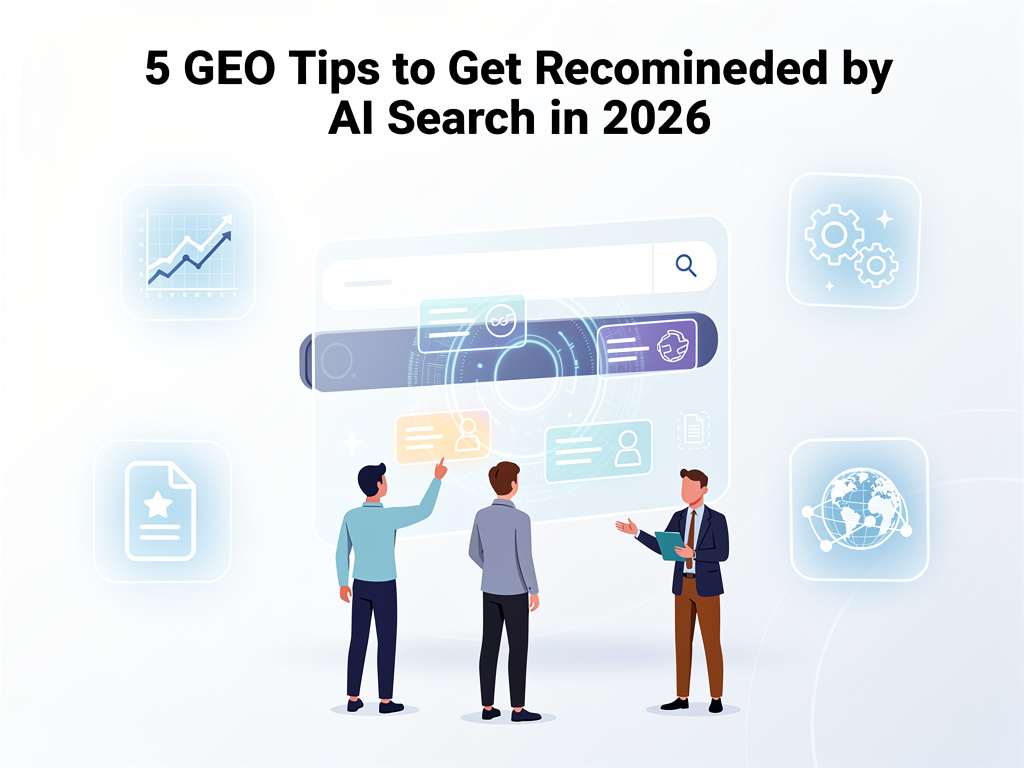
Something significant has changed in how people find information online. A growing number of users are skipping the search results page entirely and asking AI tools directly — ChatGPT, Perplexity, Google’s AI Overviews, and others. They ask a question and get an answer. No link clicking. No scrolling through results.
For businesses, this creates a new challenge. It is no longer enough to rank on page one. You need to be the brand that AI recommends when it answers your customers’ questions.
This is what Generative Engine Optimization—GEO—is about. And in 2026, it is not a trend to monitor. It is a strategy to implement.
What GEO Is and Why It Is Different From Traditional SEO
Traditional SEO is about getting your page to appear in a list of results. The user still has to choose to click on you. GEO is about becoming the source that AI systems cite when they construct their answers. The AI chooses for the user.
This distinction changes everything about how you need to think about your content and your brand. AI engines like ChatGPT and Perplexity pull from trusted, well-cited, clearly structured sources. They prefer brands that are mentioned consistently across credible platforms, that answer questions directly and accurately, and that have a visible reputation within their industry.
If your brand is not being cited by AI search engines today, these five tips are where to start.
Tip One: Write Content That Directly Answers Specific Questions
AI search engines are built to answer questions. The content they cite most often is content that answers questions clearly, accurately, and completely.
This means moving away from broad, general articles and toward content that targets specific, well-defined questions. Instead of writing about “SEO tips,” write about “how long does it take to see results from SEO” or “what causes a sudden drop in organic traffic.” These are the kinds of queries people are putting directly into AI tools.
Structure your answers with a clear, direct response at the top, followed by supporting explanations. AI systems are designed to extract precise answers, and content that makes this easy gets cited more often.
Tip Two: Build Brand Mentions Across Trusted Websites
AI systems develop a model of which brands are credible in a given space based on where those brands appear across the web. A business that is mentioned, cited, and referenced by established industry publications, news sites, and authoritative blogs carries more weight than one that exists only on its own website.
This means off-site authority building is more important than ever. Seek out guest contribution opportunities on respected industry platforms. Pursue digital PR placements. Get your brand cited in round-up articles, expert interviews, and industry reports. Every mention on a credible website is a signal that AI systems use to assess your authority.
Tip Three: Use Structured Data So AI Can Read Your Content
Schema markup is the language that helps machines understand what your content is about. For AI search engines, structured data makes it significantly easier to extract and cite information from your pages.
Implement FAQ schema on pages that answer common questions. Use a how-to schema for instructional content. Apply organization schema to your homepage and about page so AI systems can accurately identify your brand, your services, and your location.
This is not a technically complex process, but it requires intentionality. Audit your site for schema opportunities and implement markup consistently across your most important pages.
Tip Four: Establish Consistent Topical Authority
AI engines don’t just evaluate individual pieces of content—they develop an understanding of what topics a brand genuinely owns. A website that covers a subject comprehensively, consistently, and with evident expertise is far more likely to be cited than one that publishes sporadically on scattered topics.
Build content clusters around your core areas of expertise. Cover the main topic and then create supporting content that addresses every related angle your audience cares about. Over time, this depth of coverage signals to AI systems that your brand is a primary source on the subject — and primary sources get recommended.
Tip Five: Make Your Brand Easy to Verify
When AI systems evaluate sources, they look for signals that a brand is real, reputable, and reliable. A brand that is difficult to verify—limited online presence, no reviews, no external mentions, and no clear credentials—is a brand that AI will overlook in favor of one it can confidently recommend.
Make your brand easy to verify. Keep your website information current and comprehensive. Maintain active, updated profiles on relevant platforms. Gather and respond to customer reviews. Ensure your name, address, and contact information are consistent wherever they appear online.
Trust is the foundation of GEO. Build it visibly.
Your Next Step Forward
GEO is not replacing SEO — it is extending it into new territory. The brands that will dominate AI-driven search in 2026 are the ones building authority, credibility, and structured content right now. Waiting to see how AI search develops is itself a strategic decision — and not a favorable one.
At uprankseo.com, we are already building GEO strategies for businesses that want to be recommended, not just ranked. We understand how AI search systems evaluate and cite sources, and we build the content and authority infrastructure to get your brand into those recommendations. With proven results, industry expertise, and reliable support, we consistently deliver outcomes that competitors can’t match. If you want the same growth and clarity, reach out to us today.