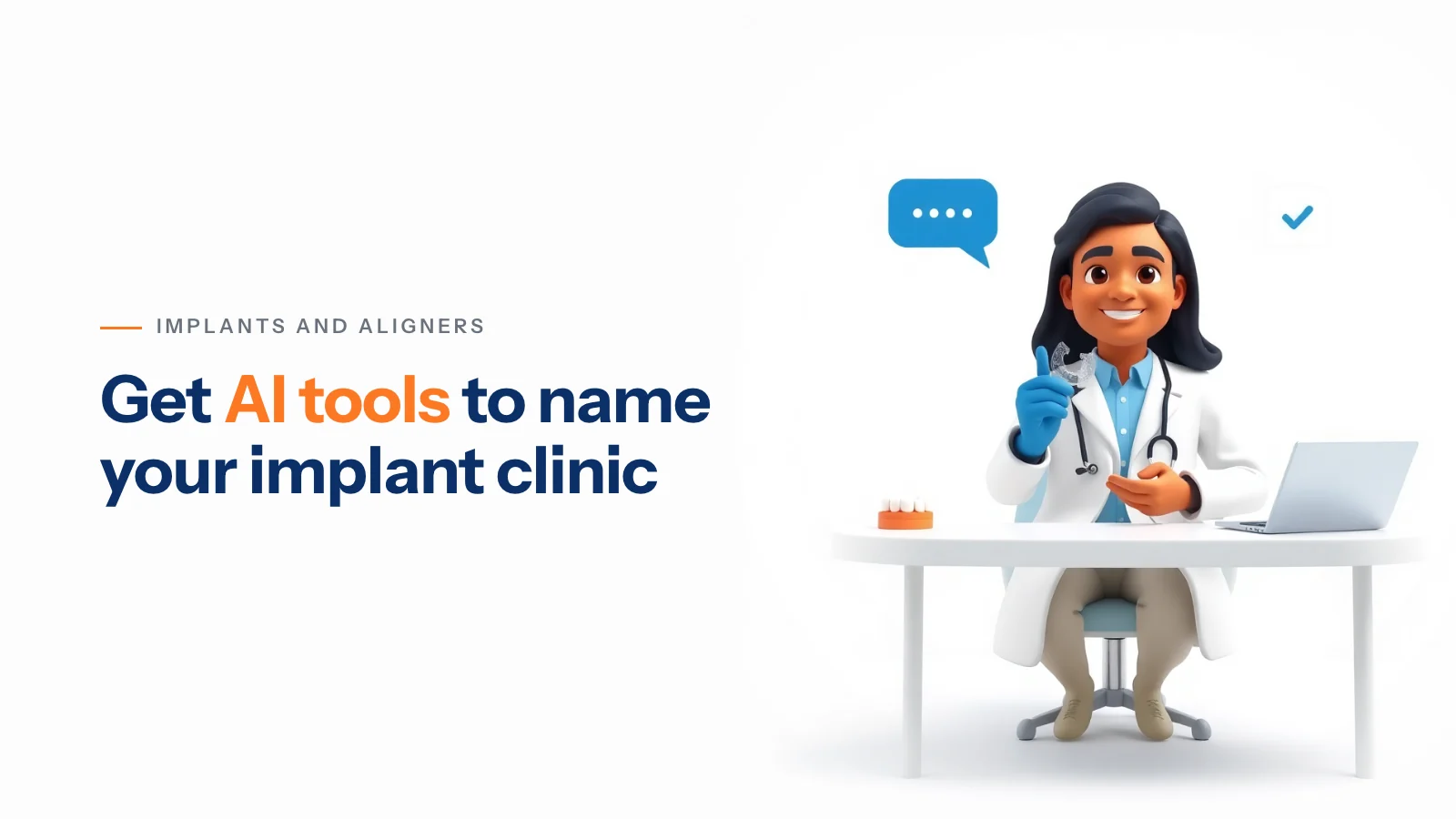
When a patient asks ChatGPT, Gemini, Claude or Grok about implants or aligners, the answer names clinics with clear pages and matching listings. For these two treatments, that means one page for each, with the steps, timelines and dentist details written out. It also means keeping before-and-after photos and patient testimonials off your site, because the National Dental Commission’s advisory of 14 October 2026 flags both.
Implants and aligners are where patients do the most homework. They cost a lot, they last for years, and most people compare a few clinics before they call. This guide covers how the AI side works, what the dental rules now say, and how to test your own clinic each month.
Why do patients ask AI about implants and aligners first?
Nobody books an implant on a whim. Someone who lost a molar wants to know whether they’re a good candidate, how many visits it takes, whether they’ll need a bone graft and roughly what it will cost. Adults who gave up on braces years ago ask a different set of questions about aligners. Will they work for my bite? How many hours a day do I wear them? What happens if I skip a week?
Those are research questions, and an AI assistant is a quick way to get through them. The clinic that answers them clearly, on pages an AI tool can read, is the one that gets described back to the patient.

What do AI tools read when they pick an implant or aligner clinic?
BrightLocal recorded the first ten sources ChatGPT showed for 800 manual local business searches in November 2024, across 20 US cities. Business websites made up 58% of those sources, mentions on other sites 27% and directories 15%. It’s an American study and it’s two years old now, but the split still shows where to start. Our AI discovery guide explains how these sources fit together, and our dental clinic guide covers the wider set-up.
For an implant or aligner clinic, this table is the short version.
| What the AI checks | What your implant or aligner page should show |
|---|---|
| Do you offer the treatment? | A separate page for implants and another for aligners, not one line on a services list |
| Who does it? | The dentist’s name, qualifications and registration number, matching your listings |
| What happens, and when? | Each stage in order, with how long healing or wear takes |
| What do other people say? | Genuine, recent Google reviews and mentions in local news or association listings |
| Is it current? | A “last reviewed” date, so readers can see the page is up to date |
What should an implant or aligner page say?
Most clinic websites say “painless, permanent, natural-looking smiles” and stop there. An AI tool has nothing specific to repeat, and claims like those can get a clinic into trouble, as we cover below.
A page that works lists the stages in order: the first consultation, the X-rays or scan, the planning, the placement or the first set of aligners, the healing period or the refinements, and the follow-up checks. For each stage, say how long it usually takes and what the patient needs to do in between.
Answer the questions patients actually type. Is a bone graft needed, and when? Who is not a suitable candidate? What happens if an implant doesn’t settle, or if teeth stop moving to plan? A short FAQ at the bottom, written the way a patient would ask it, finishes the page.
Cost is where many clinics go vague. The advisory, as reported, says nothing about cost, so a price range stated plainly, with what it covers and what costs extra such as a scan or a crown, is the safer route. Our local SEO service covers the listings side, and our AI SEO service can review your treatment pages for clarity.
Can you show before-and-after photos for aligners and implants?
This is where the rules bite hardest. As Medical Dialogues reports the advisory, it flags “publishing patient testimonials and before-and-after photographs”. Aligner and implant clinics rely on smile galleries more than most dental practices, so this matters more to you. Until you have a clear answer for your clinic, keep patients’ before-and-after photos off your website, your Google Business Profile and your social pages.
Filming consultations or procedures for social media is flagged too, which rules out a fair share of clinic reels.
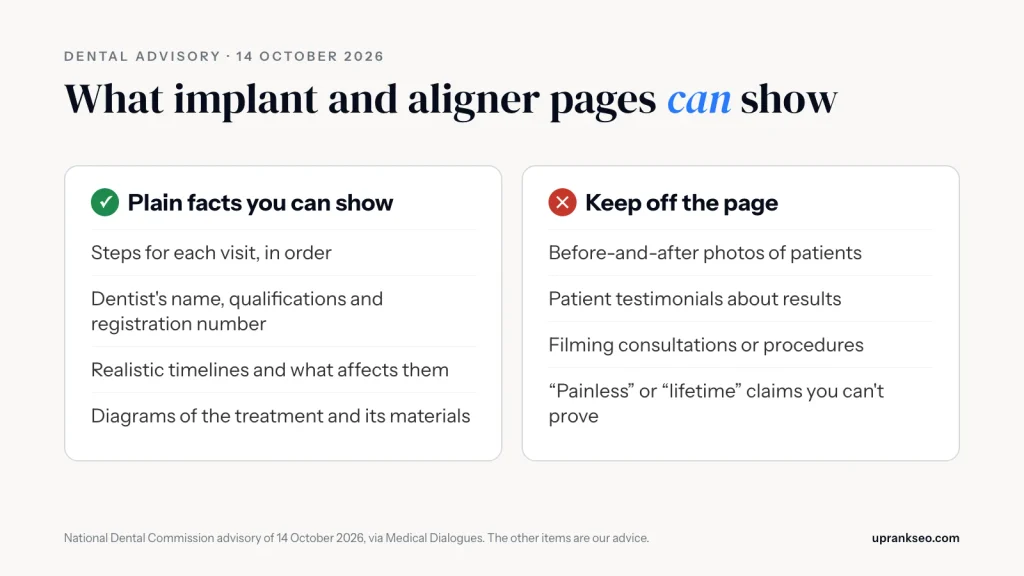
So what can you show instead? Diagrams of the treatment, the number of visits, the materials you use and the factors that affect the result, such as bone and gum health and how closely the patient follows instructions. Those are facts an AI tool can quote, and they help a patient understand the process before they sit in the chair.
Which rules apply to implant and aligner clinics now?
Dentists are no longer regulated by the Dental Council of India. Careers360 reported in March 2026 that the National Dental Commission replaced it, that the Dentists Act, 1948 has been repealed and that the new framework took effect on 19 March 2026. The NMC’s guidelines apply to medical practitioners, not dentists, so don’t copy a hospital’s checklist across without checking.
On 14 October 2026, the Commission’s Ethics and Dental Registration Board issued an advisory on unethical social media promotion. It cites clauses 8.1 to 8.3 of the Revised Dentists (Code of Ethics) Regulations, 2014, which cover advertising, patient solicitation, confidentiality, publicity and signage. It warns that an established violation may invite disciplinary action, from a show-cause notice to suspension or removal from the registers.
The advisory doesn’t name implants or aligners. It applies to every registered dentist, whatever they treat. Read the full text with your legal adviser before you publish anything new.
Do Google reviews help implant and aligner clinics?
Yes, and they matter more when patients are weighing a big treatment. Google says “more reviews and positive ratings can help your business’s local ranking”. BrightLocal also found that ChatGPT draws on review information from Google and Google Maps, though the study didn’t measure how much.
Don’t offer discounts or free aligners in return for a review. When you reply, keep it general and never discuss a patient’s treatment, since the advisory’s clauses cover confidentiality.
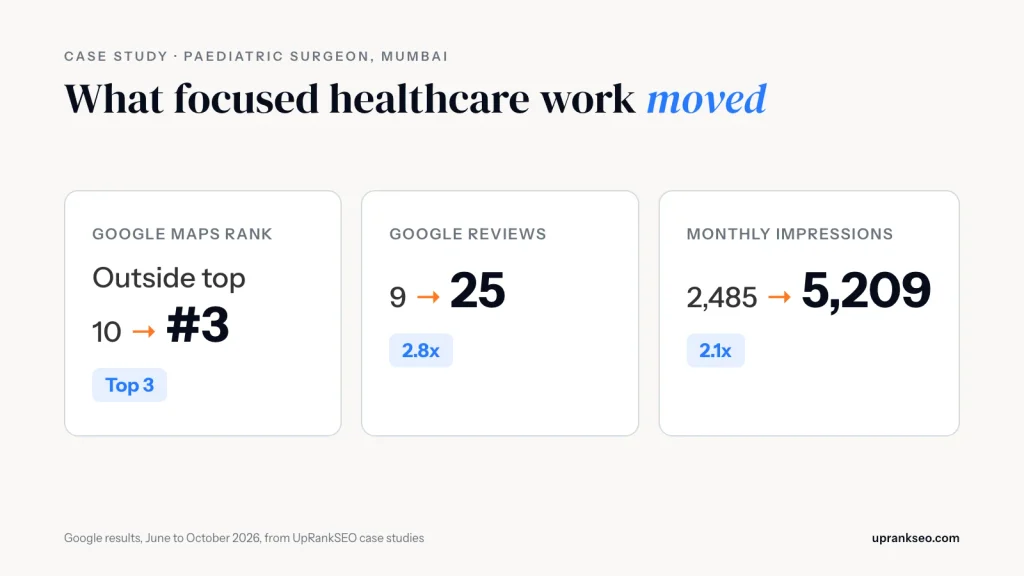
A paediatric surgeon in Santacruz West, Mumbai, works in a different specialty, but the method is the same. Between June and October 2026, the surgeon’s Google Maps ranking moved from outside the top 10 to #3, and Google reviews went from 9 to 25. Those are Google results, not AI results, so read them as a sign of direction rather than proof of AI visibility. See the full case study.
How do you check whether AI recommends your implant or aligner clinic?
Run these four questions in fresh chats on ChatGPT, Gemini, Claude and Grok, once a month:
- “Which clinic near Vashi station does dental implants and explains the steps?”
- “Who does clear aligners in Thane, and what qualifications do the dentists have?”
- “Is there a dentist in Kalyan who can replace a missing molar with an implant?”
- “Which dental clinic in Mumbai offers aligners for adults and says how many visits it takes?”
Note the clinics named, the pages each tool cites and whether the details it repeats match your own. The cited pages show what to fix and where to get listed next. One check tells you little, so keep a short log with the date, the tool, the question and the clinics named. Over a few months, that log shows whether your changes are moving the answers.
Frequently asked questions
Can we show before-and-after photos if patients consent? The advisory, as reported, flags before-and-after photographs and doesn’t mention consent as an exception. Keep them off your public pages until your legal adviser or the dental council gives you a clear answer for your clinic.
Which body should a dental clinic check first? The National Dental Commission, which replaced the Dental Council of India in March 2026. Its Ethics and Dental Registration Board issued the advisory of 14 October 2026.
Do implants and aligners need separate pages? Yes. Each treatment needs its own page with its own stages, timelines and questions. A single “Dental services” page gives an AI tool very little to repeat back to a patient.
Does ChatGPT use Google reviews? BrightLocal’s study, from November 2024, found that ChatGPT draws on review information from Google and Google Maps. It didn’t measure how much, so treat reviews as one signal among several.
Can a price range go on the website? The advisory, as reported, says nothing about cost. Publish a range that’s accurate and current, say what it includes and what costs extra, and avoid offer language. Check the wording with your legal adviser.
How long before AI tools notice new pages? Answers built from live search can change within a few weeks of your pages being indexed and ranking. What the models know from training changes much more slowly. Keep your listings matching while you wait.
Find out what AI says about your implant and aligner work
We’ll ask ChatGPT, Gemini, Claude and Grok the questions your patients ask, show you which clinics get named and point out details that don’t match. It’s free. Request your AI visibility check.